
Choose construction for the reader’s age
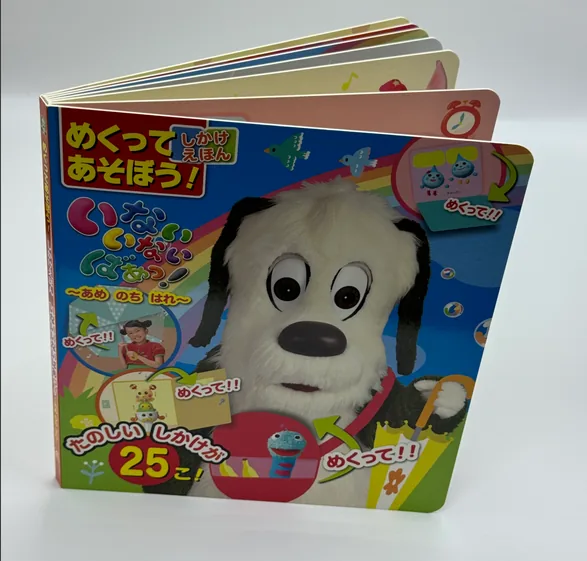
Younger readers need thick, stable pages that turn easily and resist bending. Page size, board thickness and the number of spreads should be balanced so the book opens comfortably without becoming excessively heavy.
Pay attention to every edge
Rounded corners and smooth die-cut profiles reduce sharp points. The lamination and board layers should remain firmly bonded through repeated handling, especially around shaped pages and moving components.
Specify appropriate inks and coatings
Materials should be selected for the destination market and intended age range. Buyers should discuss applicable testing, low-odor inks and protective finishes before approving the production specification.
Test the finished sample
A physical sample allows you to inspect page movement, color, lamination, corner finishing and the overall feel in a child’s hands. It also confirms how the design performs after trimming and assembly.
Project checklist
- Confirm destination-market test requirements
- Use rounded external corners
- Inspect lamination around die-cut shapes
- Approve a physical sample before mass production